
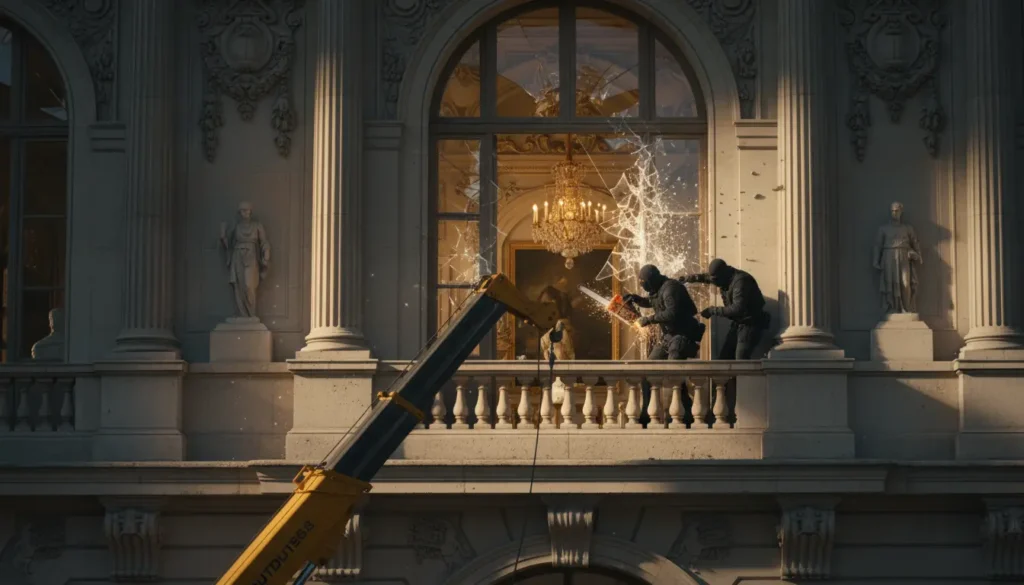
The audacious, eight-minute robbery has garnered global repercussions, with 60 investigators now on the case. Preliminary findings suggest the involvement of organized crime. The prosecutor remained non-committal about the possibility of internal collusion. The operation was executed with precision: at 9:30 AM, the thieves positioned a crane, enabling two members to access a balcony. They then breached a window with a chainsaw to enter the Apollo Gallery, a hall commissioned by Louis XIV to celebrate his glory as the Sun King.
With their faces concealed, the perpetrators stole nine 19th-century artifacts from the crown jewels collection, including the renowned crown of Empress Eugénie, wife of Napoleon III.
New Words:
1. Perpetrators: The individuals who carry out a harmful, illegal, or immoral act.Example: The perpetrators of the cyberattack were traced to a foreign country.
2. Collusion: A secret and illegal cooperation or conspiracy in order to deceive or cheat others.
Example: The investigation revealed collusion between the company and government officials.
3. Repercussions: The unintended and often unwelcome consequences of an action or event that occur sometime afterward.
Example: The company’s decision to close the factory had serious repercussions for the local community.