
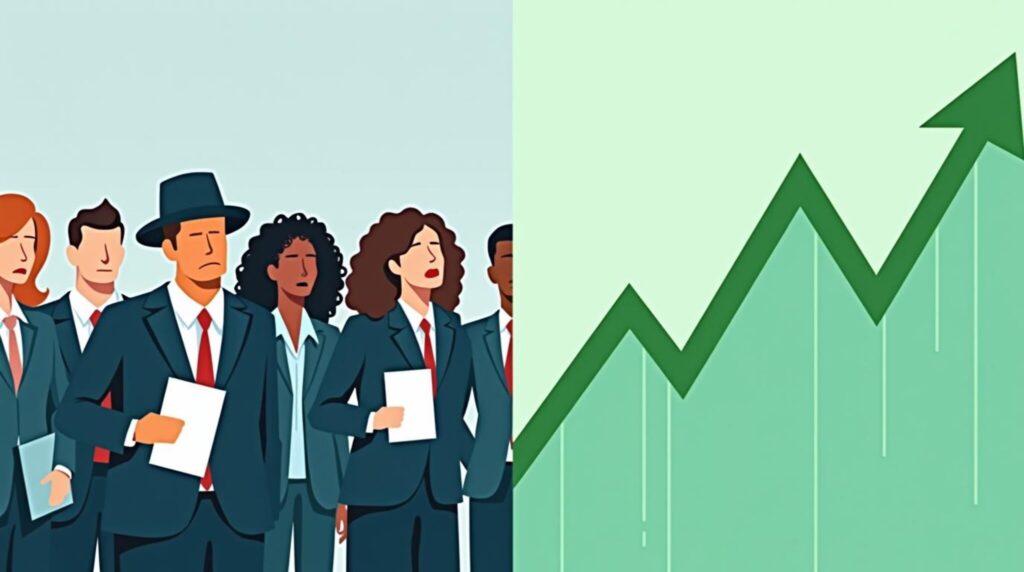
Only employees in roles considered “essential,” such as air traffic controllers, are required to continue working without receiving their regular paychecks. The situation has been intensified by political pressure. For instance, President Donald Trump has threatened mass layoffs to reduce the size of the federal workforce. These actions can be seen as a form of retaliation against political opponents. While this is bad news for workers, it has a strange effect on the economy. When many people are out of work, they spend less money, which can lower inflation. This may cause the central bank to lower interest rates, which investors often like. So, bad news for workers can sometimes look like good news for the stock market in the short term.
New Words:
1. Budget : An official plan that shows how money will be spent over a period of time. Example: The family made a budget to save money for a new car.2. Retaliation : The act of harming someone because they have harmed you. Example: He painted his neighbor’s fence as an act of retaliation for the loud party.
3. Inflation : The rate at which the general level of prices for goods and services is rising, and subsequently, purchasing power is falling. Example: Due to inflation, the price of bread is higher than it was last year.