
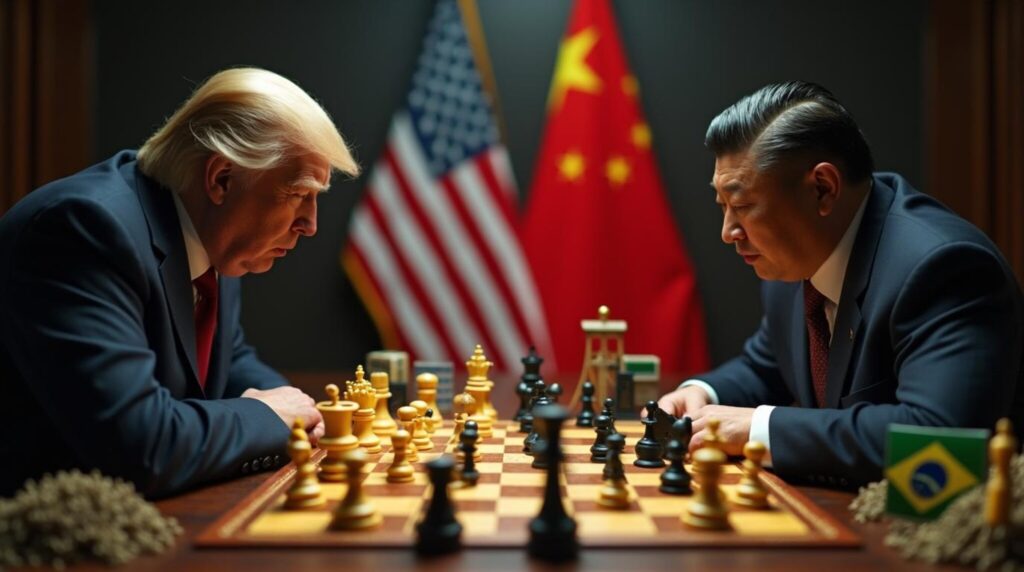
The escalating trade war, characterized by the Trump administration’s protectionist tariffs, has triggered profound repercussions across the global soybean market. In a strategic act of economic retaliation, China ceased all imports of U.S. soybeans, precipitating a severe crisis within the American agricultural sector. U.S. farmers are confronting catastrophic financial losses, with many facing bankruptcy due to the sudden collapse of their primary export market. The logistical challenge is compounded by a lack of adequate storage for the massive, unsold stockpiles, a situation farmers describe as dire.
This geopolitical maneuver has reshuffled global trade dynamics, directly benefiting South American agricultural economies. Brazil and Argentina have capitalized on the situation, significantly increasing their soybean exports to meet Chinese demand. Argentina further leveraged the opportunity by strategically eliminating its export duties. Beijing’s ultimatum—to resume purchases only upon the complete removal of U.S. tariffs—demonstrates the use of agricultural trade as a powerful bargaining tool in international disputes. The crisis illustrates the far-reaching consequences of volatile trade policies, which not only disrupt industries but also create pervasive economic uncertainty and instability for producers and consumers alike.