
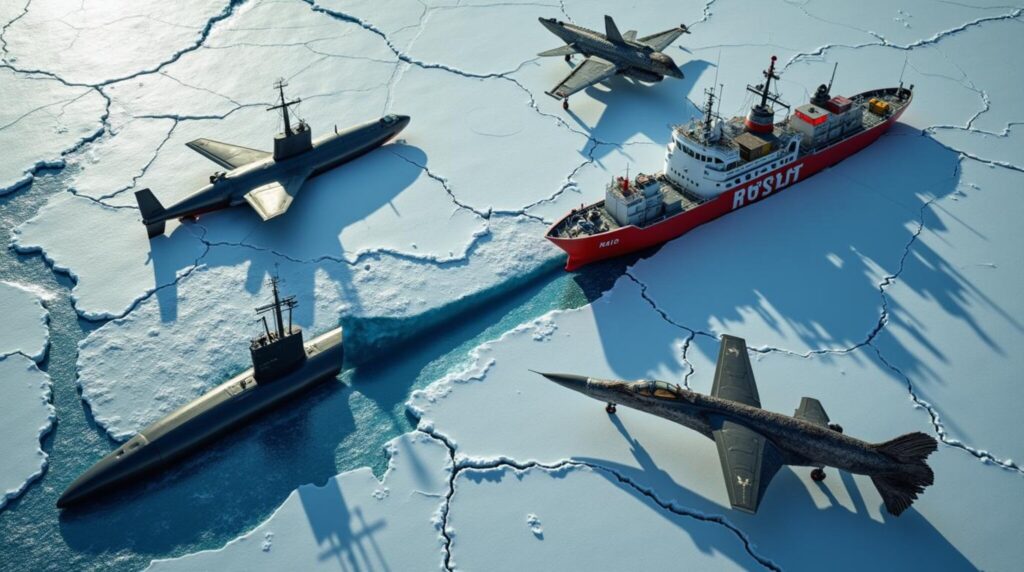
The primary catalyst for this shift is the new accessibility of the region. Melting ice has unveiled potential new maritime routes and access to vast, untapped natural resources, including an estimated 30% of the world’s undiscovered gas and 13% of its undiscovered oil. This has intensified rivalries between major powers. Russia is remilitarizing its northern coast, reactivating Soviet-era bases to protect its economic interests and nuclear arsenal. In response, NATO has expanded its northern flank with the inclusion of Finland and Sweden. Furthermore, non-Arctic actors like China have asserted their interests, with Beijing promoting its “Polar Silk Road” and positioning itself as a “near-Arctic state.” This complex interplay of military posturing, economic ambition, and climate change has transformed the Arctic from a “high latitude, low tension” zone into a contested frontier, posing significant challenges to global stability.