
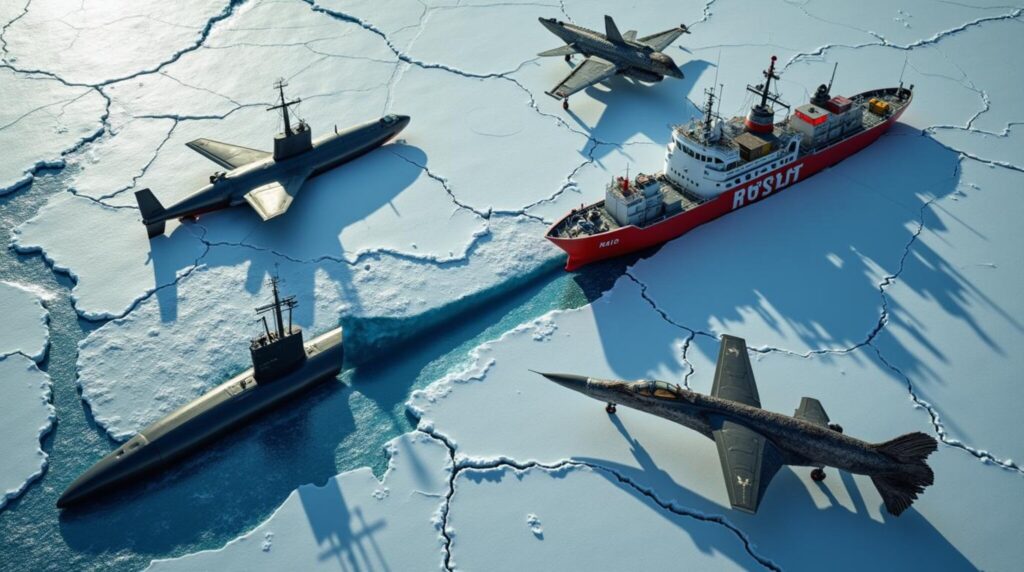
This has intensified competition among global powers. The eight Arctic nations, including the U.S. and Russia, once focused on scientific cooperation through the Arctic Council. However, this spirit of partnership has faded, especially after Russia’s invasion of Ukraine. The region is now a point of geopolitical friction. Russia is rebuilding its Soviet-era military bases, while NATO is strengthening its presence, with Finland and Sweden recently joining the alliance. Even non-Arctic countries like China are involved. China calls itself a “near-Arctic state” and is investing in a “Polar Silk Road,” seeking influence and access to resources. The race for the Arctic’s oil, gas, and minerals is on, turning this once-frozen frontier into a hotbed of global competition.
New Words:
1. Strategic : Carefully planned to achieve a specific long-term goal, often related to military or political advantage.Example: The new shipping route offers a strategic advantage for trade.
2. Cooperation : The action of working together with others to achieve a common goal.
Example: Scientific cooperation between the Arctic nations has decreased recently.
3. Geopolitical : Relating to the way a country’s geography and international relations affect its power and policies.
Example: The melting ice has created a new geopolitical situation in the Arctic.